Trading Made Simple With a 9
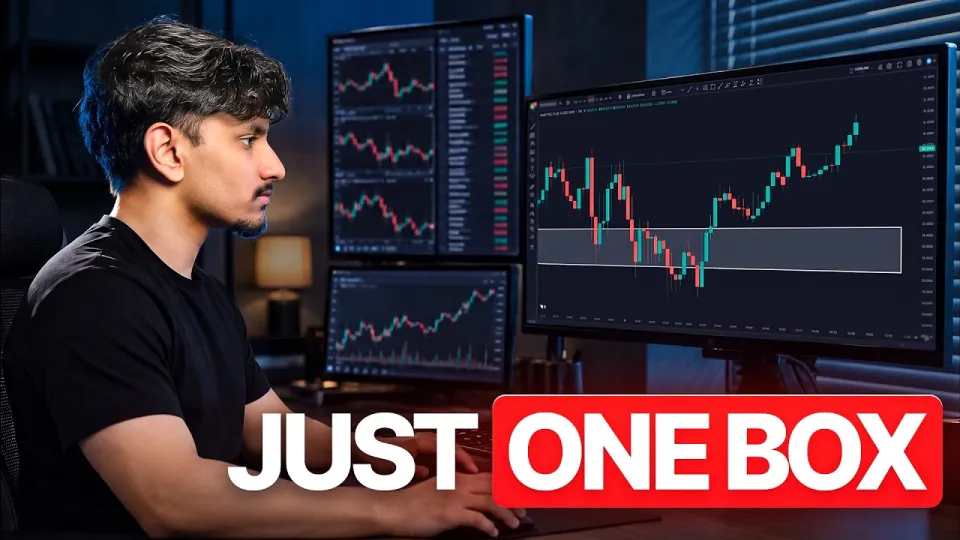
Video: Once You Master This Strategy, Trading Becomes Incredibly Simple
You can order the same kind of articles for your own video to boost it on YouTube and Google. Just message the Telegram bot @sat_sit_bot. It writes articles around your video, embeds the video and publishes them on popular niche websites (no ads). Try it free: 50 articles on us.
Key takeaways
- 90% of traders fail because they overcomplicate with too many indicators and strategies.
- The 9:30 AM strategy focuses on the first hour of the US stock market open for high-quality trades.
- Step 1: Identify key levels like premarket high/low and previous day's high/low.
- Step 2: Use a simple trendline and price action to confirm direction.
- Step 3: Enter on a retest with a tight stop loss for a favorable risk-reward ratio.
Trading becomes simpler when you focus on a repeatable process instead of chasing every indicator. The 9:30 AM strategy taught by Scarface Trades is a three-step framework that helps traders find high-quality setups at the US market open. By mastering this approach, you can cut through the noise and execute with confidence.
For a free course that expands on these concepts, check out the Simple Trader Playbook.
Why Most Traders Struggle
Most traders fail because they overload their charts with indicators and jump between strategies. The problem is not a lack of information but a lack of focus. When you try to combine moving averages, RSI, MACD, and multiple timeframes, you create confusion and hesitation. The 9:30 AM strategy solves this by narrowing your attention to a specific time window and a clear set of rules. It forces you to ignore distractions and concentrate on price action alone.
The 9:30 AM Edge
The first hour of the US stock market open, from 9:30 AM to 10:30 AM Eastern Time, offers increased volatility and volume. This creates opportunities for day traders and scalpers. The strategy is not about predicting the future but about reacting to clear levels and patterns. By focusing on this window, you avoid the choppy midday conditions and trade when the market is most active. The edge comes from consistency: you apply the same three steps every day, which makes the process simple and repeatable.
Step 1: Setting Up the Trade
Before the market opens, mark the key levels on your chart. These include the premarket high and low, as well as the previous day's high and low. These levels act as magnets for price and often provide support or resistance. When the market opens, watch how price reacts to these levels. A breakout above the premarket high with strong volume can signal a bullish day, while a rejection at the previous day's high might indicate a reversal. The goal is to identify a clear direction and a potential entry point.
Step 2: The Profitable Strategy
Once the key levels are marked, use a simple trendline to confirm the trend. Draw a trendline connecting the premarket highs or lows. If price is making higher highs and higher lows above the trendline, look for long trades. If it's making lower highs and lower lows below the trendline, look for short trades. Combine this with price action patterns like engulfing candles or strong momentum candles. The strategy does not require complex indicators; it relies on the basic principles of supply and demand.
Step 3: Entry Model
Wait for price to retest the key level or the trendline before entering. Chasing a breakout often leads to poor risk-reward. Instead, let the price come back to your level and show a rejection candle or a bullish/bearish pattern. Enter on the close of that candle with a stop loss just beyond the recent swing high or low. This entry model increases your win rate because you are buying at a better price and have a clear invalidation point.
Example: Increasing Win Rate
Imagine the premarket high is at $100. The market opens and breaks above it, then retraces to $100. You see a bullish engulfing candle form at that level, so you enter long with a stop at $99.50 and a target at $102. This gives you a risk-reward ratio of 1:4. By waiting for the retest, you avoid a false breakout and improve your chances of success. The same logic applies to short trades: wait for a retest of resistance and enter on a bearish signal.
Common Questions and Concerns
Many traders wonder about the time zone: the strategy uses Eastern Time (ET) because it aligns with the US market open. For those who prefer not to trade the 1-minute chart, you can apply the same principles on the 5-minute or 15-minute chart, though the number of setups may decrease. Position sizing is another concern: the strategy works on any account size, but you must adjust your share size to keep risk consistent. Some viewers ask about trading forex; while the video focuses on stocks and futures, the concepts of key levels and retests can be adapted to forex pairs like EURUSD. Backtesting is essential: before risking real money, test the strategy on historical data to understand its performance in different market conditions.
Useful Links
- Free Simple Trader Playbook Course
- The Accelerator Private Community
- Scarface Trades on Instagram
- Scarface Trades on X
Final Thoughts
The 9:30 AM strategy offers a straightforward framework that simplifies trading by focusing on key levels, trend confirmation, and disciplined entries. By mastering these three steps, you can filter out noise and execute with confidence. Remember that consistency and backtesting are crucial for long-term success. This breakdown is inspired by the Scarface Trades channel, where you can find more educational content. For a deeper dive, enroll in the free course via the Simple Trader Playbook and start simplifying your trading today.
Source: Once You Master This Strategy, Trading Becomes Incredibly Simple · Markdown version
Questions & answers
Which time zone is used for the 9:30 AM strategy?
The strategy uses Eastern Time (ET) because it aligns with the US stock market open. If you are in a different time zone, convert 9:30 AM ET to your local time.
Can this strategy be applied to forex or other markets?
Yes, the core principles of key levels, trendlines, and retests can be adapted to forex, futures, and crypto. However, the specific timing may need adjustment based on the market's active hours.
Do I need a large account to trade this strategy?
No, the strategy can be traded with any account size. The key is to adjust your position size so that your risk per trade is a small percentage of your account, typically 1-2%.
How important is backtesting for this strategy?
Backtesting is crucial because it helps you understand how the strategy performs in different market conditions. It builds confidence and allows you to refine your entry and exit rules before risking real money.